When a private dental practice in London or Manchester needs to increase high-value treatments like Invisalign or dental implants, the first instinct is to invest in SEO or paid ads. But driving traffic to a slow, poorly structured website is like pouring water into a leaky bucket.
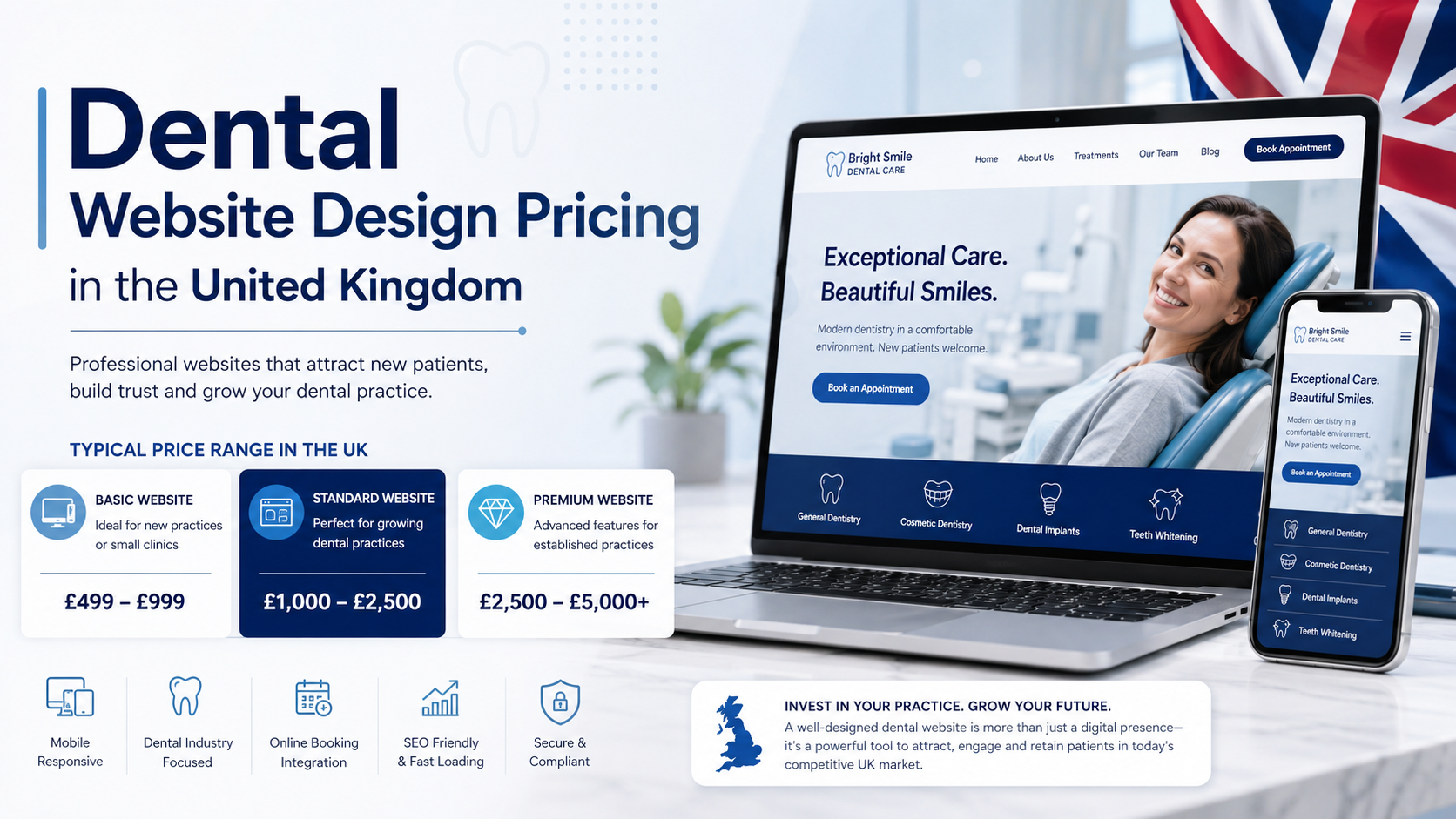
Patient acquisition relies heavily on trust and immediate technical performance. Yet, when practices research the market, they find a massive disparity in dental website design pricing in the United kingdom, with quotes ranging from £800 to over £15,000.
This vast difference exists because the market is divided between automated theme assemblers and technical web development specialists who build for performance. If you are a practice owner, understanding what you are actually paying for will prevent you from inheriting a digital asset laden with hidden technical debt.
The price of a clinical website is rarely about how many pages it has. Instead, it is dictated by asset architecture, security compliance, and how the platform handles user experience.
A cheap website is almost always built on a bloated, pre-made template. A developer or agency installs a heavy commercial theme, chains together fifteen different third-party plugins to achieve basic features, and hands over the keys.
Conversely, an experienced WordPress developer focuses on clean, modular engineering. They write explicit code to handle features, ensuring the site handles high traffic smoothly and satisfies search engine algorithms.
To understand why prices vary so wildly, it helps to look at exactly what happens behind the scenes during the build process.
| Feature / Aspect | Template Installer Setup | Custom WordPress Development |
|---|---|---|
| Codebase Quality | Bloated with unused CSS/JS and redundant options. | Streamlined, lightweight, and purpose-built. |
| Page Loading Speed | Often sluggish; heavily reliant on multiple caching plugins. | Rapid; natively optimized for Core Web Vitals. |
| Security Risk Profile | High vulnerability due to excessive third-party plugins. | Low; minimal dependencies and secure code execution. |
| Scalability | Breaks or slows down when new features are added. | Scales effortlessly as your clinical services expand. |
| Long-Term Total Cost | High; frequent fixes, malware cleanups, and re-builds. | Low; predictable up-keep and stable performance. |
When you pay for professional custom wordpress development, you are paying for the elimination of digital clutter. Every line of code added to the site serves a specific business purpose, such as capturing a lead or displaying a case study.
In the medical and dental space, performance directly influences patient conversion. If your site takes more than three seconds to load, an anxious patient looking for an emergency root canal will click back to search results and choose a competitor.
Many business owners do not realize that heavy commercial themes load thousands of lines of unnecessary code. This directly violates Google’s Core Web Vitals guidelines, which penalize sites that exhibit slow visual loading times or unexpected layout shifts.
Signs your site was built by a template installer, not a developer:
- You need four different optimization plugins just to get a green score on speed tests.
- Modifying a single paragraph or image breaks the layout of an entire section.
- Your dashboard is cluttered with notices, upsells, and licensing warnings from various plugin authors.
- Simple forms fail to send notifications reliably without third-party transactional email extensions.
A clinic owner recently reached out to me regarding their private practice website. They had paid an agency a premium rate, yet the site was taking over 5.4 seconds to become interactive. Potential patients were abandoning the booking form halfway through.
Upon code review, I found the previous team had stacked three competing caching plugins and used a heavy visual builder to create basic text columns. This layout setup forced the browser to download massive, redundant stylesheets before rendering any text.
[Before] Overlapping Caching Plugins + Heavy Page Builder Scripts -> 5.4s Load Time
[Fix] Cleaned Database, Removed Conflict Plugins, Rewrote Navigation & Layout in Clean PHP
[After] Pure, Compliant Asset Loading -> 1.2s Load Time (31% Increase in Completed Bookings)
By removing the conflicting plugins, optimizing database queries, and replacing the heavy layout blocks with clean template files based on standard WordPress developer resources, the load time dropped to 1.2 seconds. Bookings increased by 31% over the following month without spending an extra penny on advertising.
If you are currently reviewing quotes for dental website design pricing in the united kingdom, you need to look past the design mockups. You must interview your potential technical partner to ensure they understand performance engineering.
If a vendor cannot answer these questions clearly without using confusing technical jargon, they are likely treating your business asset as a assembly-line project.
A website is not a static marketing brochure; it is a software application designed to generate revenue. Selecting the cheapest quote frequently leads to long-term issues: slow page speeds, broken mobile layouts, and security vulnerabilities that expose sensitive patient inquiries.
Investing in a proper affordable web design for small business that balances clean engineering with clear commercial goals will save you thousands of pounds in future emergency repairs, malware removals, and lost opportunities.
If your current medical website feels sluggish, is difficult to update, or isn’t generating the patient inquiries your practice needs, this is exactly the type of technical audit and structural remediation I provide for my clients. You can view my tailored engineering options on my main page at thewebfreelancer.com, where I help businesses turn slow, broken websites into high-performing assets.
When assessing dental website design pricing in the united kingdom, remember that you are not buying web pages—you are purchasing user behavior and trust. Cheap builds introduce friction, slow down patient acquisition, and increase technical overhead over time.
Most websites try to impress users. The best ones remove friction. And that difference is what users remember—and what businesses profit from. Investing in clean, precise development ensures your practice stays ahead of the competition.